
Infant torticollis usually involves tightness or imbalance in the muscles of the neck—often the sternocleidomastoid (SCM)—which causes a baby to tilt or rotate their head to one side. This sometimes comes from in-utero positioning or birth strain, especially with long labors, C-sections, vacuum extraction, or breech presentations.
Birth can place stress on the upper cervical vertebrae (especially C1/C2). When joints in the upper neck don’t move well, the surrounding muscles often become tight or overactive.
Chiropractic care for infants focuses on gentle, specific spinal adjustments to improve motion, decrease muscle tension, and restore proper neurological function.
We have had dozens of torticollis success stories at Crossroads Chiropractic from babies to children to adults. One of our favorites is Eloise. This cutie came to us with a case of infant torticollis at just a few months old. Her torticollis resolved rather quickly through gentle, specific chiropractic adjustments. Our adjustments to the upper cervical spine not only allowed her neck muscles to relax and balance but also allowed brain to get better input about her head position. Why is that important? Her improved proprioception helped her to learn symmetrical movement pattern allowed for more coordinated motor development (rolling, crawling, tracking) as she grew.
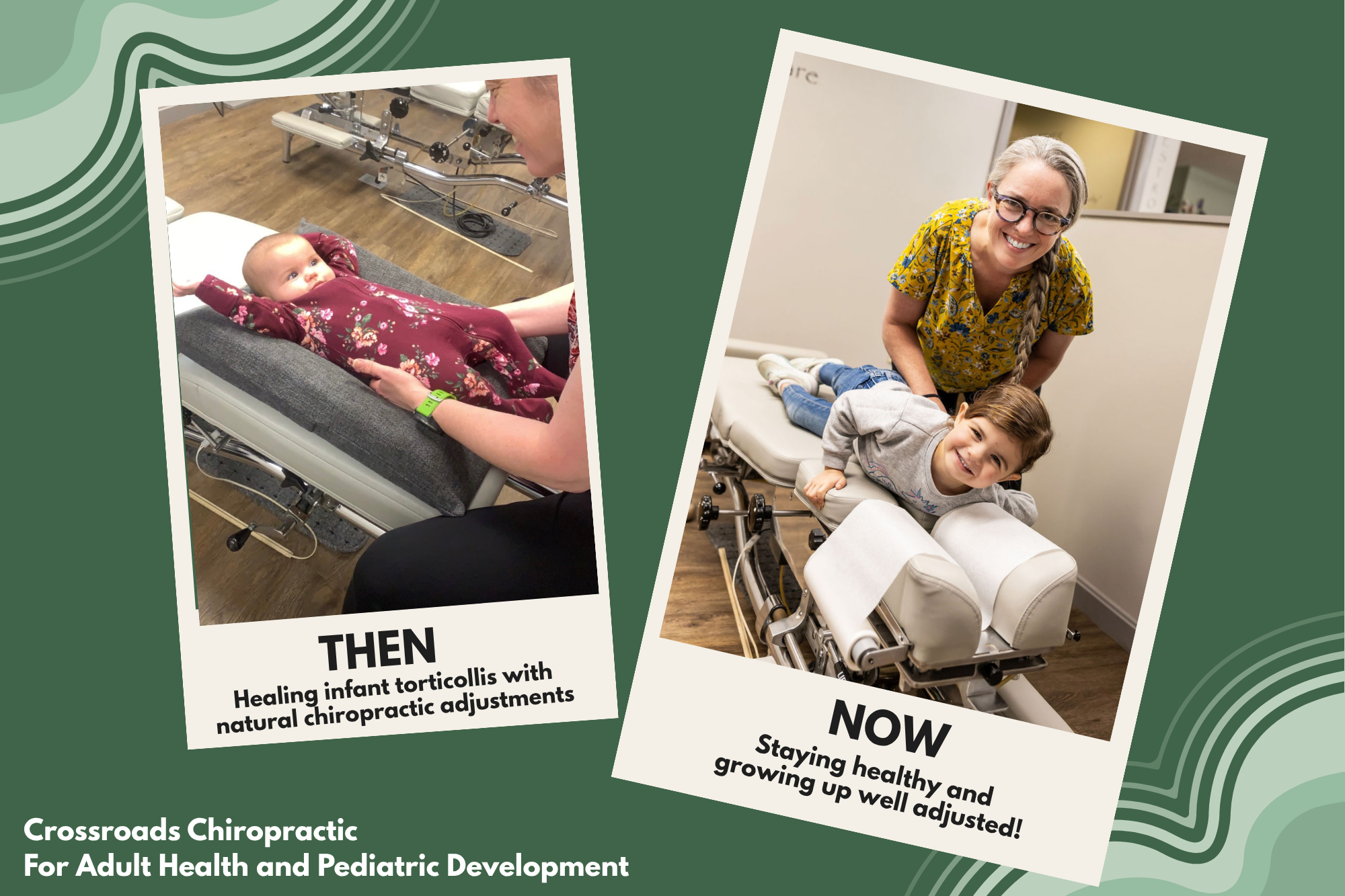
Eloise continued on with care at Crossroads after her torticollis resolved because her parents value a healthy spine and nervous system for their growing daughter. When her baby brother arrived, he was checked for subluxations too! Their parents write, “We’ve found that both kids have better digestion, and less meltdowns. It’s also noticeable in behavior when we miss a week of chiropractic care, they tend to be clumsier and grumpier! Also in their first year, if they were constipated, getting adjusted always fixed it!”
How is all of that possible? Chiropractic adjustments support balance between the Parasympathetic and Sympathetic Nervous System. The upper neck houses important parasympathetic pathways (think Vagus Nerve influence), explaining why babies (and grown-ups) often become calmer, feed and digest better, and demonstrate improved health outcomes after chiropractic adjustments.
Getting adjusted isn’t just about neck and back pain, it’s about clear communication between the brain and the body for optimal function and growth – for every age and stage of life!