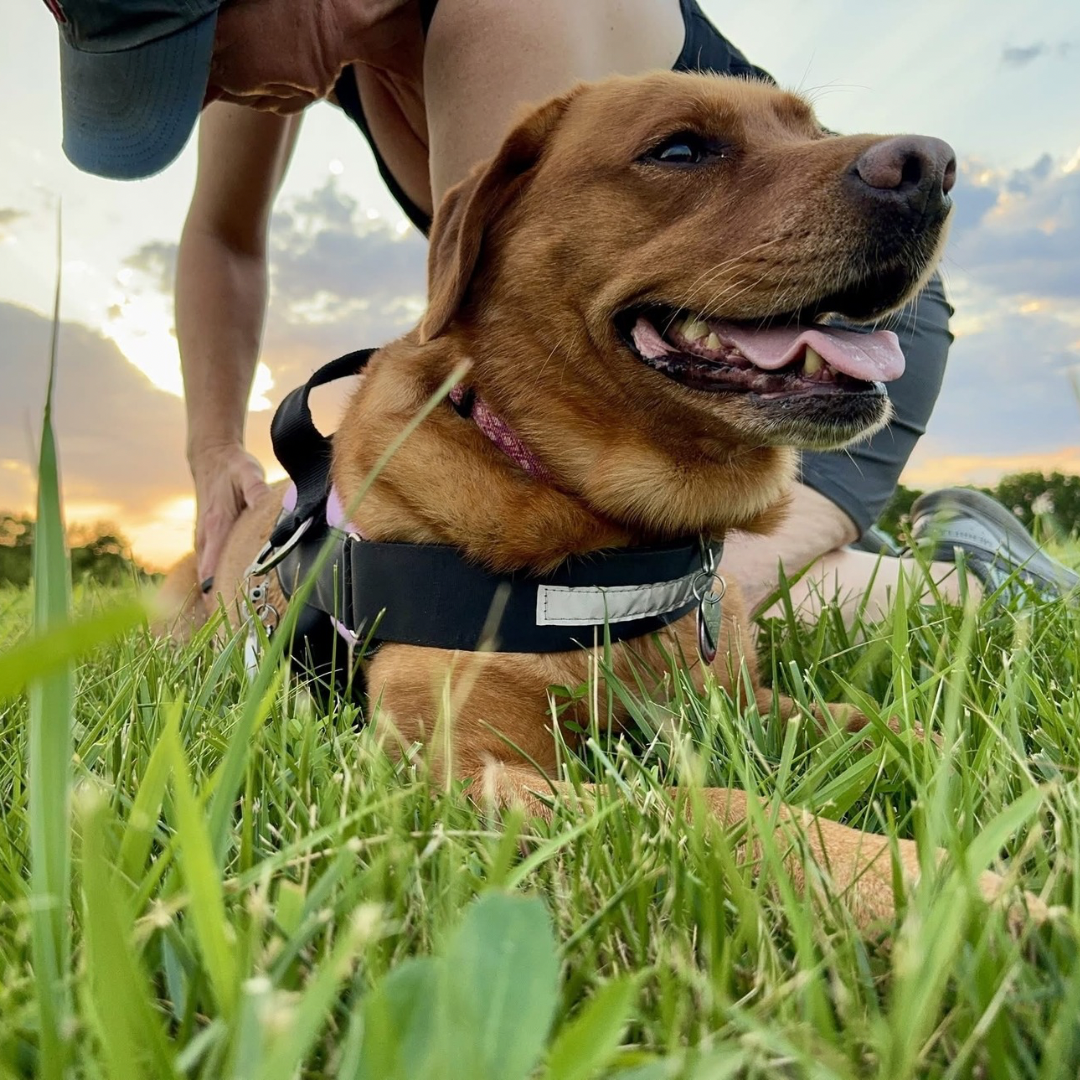
The granite state is saying yes to holistic care for animals. This spring a new law was signed by Governor Ayotte, establishing that a Doctor of Chiropractic or a Doctor of Veterinary Medicine who has completed the 200+ post-graduate course hours and exam can practice Animal Chiropractic care in New Hampshire. Recently, I interviewed animal chiropractor Amy Haas, PhD, DC to learn more.
Q: How did you become an animal chiropractor?
A: Well, you know how life sends you on twists and turns in the adventure? I started out as a research scientist – I got my PhD in Biochemistry, and worked first as a postdoctoral fellow then got a job as a card-carrying scientist at a biotech company – but it just plain wasn’t what I wanted to spend the rest of my life doing. So, I opted to change direction and go back to school, to become a chiropractor! I’ve been in practice since 2008 and I finally achieved my animal certification after doing 200+ hours of postgraduate coursework. So now, my mission is to help BOTH humans AND their companion animals to go out and play!
Q: What the goal of animal chiropractic care?
A: To help our four-legged friends feel better and live healthier! Those of us pet-parents who have seen dogs and cats through the course of a lifetime remember how our pets “feel” and act when they are young – wiggly, like they’re made of jello, and oh, the zoomies! Jumping, running, doing whatever they need to do, have to do, want to do, no problem! Then as they age, or “slow down,” this wiggliness gives way to a more solid structure, then a structure that doesn’t move very well – hard to go up the stairs, and they don’t want to run as much. Well, chiropractic care is a gentle, natural way to preserve or restore the quality of “ease” to a quadruped structure, which results in increased function, preservation of health adaptability, and resilience across a lifetime. I love-love-love to hear from my pet parents how spunky dogs behave after an adjustment. One of my elders, a 14-year-old, just struts after he gets adjusted – head and tail high, butt wagging! So the goal of animal chiropractic care is to restore life to years, and to add years to life – because if a dog can comfortably exercise, sleep, and play, they will last longer. It’s really as simple as that.
Q: What are some of the signs or symptoms of vertebral subluxation in a canine or horse?
A: Some signs and symptoms are obvious, and some are more subtle. We have to remember that our animals can’t “tell” us what is bothering them, and often our animals will hide pain. Some of the manifestations that I see include decreases in performance, mood, restlessness, difficulty going upstairs or jumping into the car, and aversion to being saddled or ridden for a horse – or difficulty switching leads. Really, any change in the animal’s willingness to do something they normally would do could be a sign that their body doesn’t feel good! And that can mean they may have vertebral subluxation, and that they could benefit from Chiropractic adjustments to correct or reduce that vertebral subluxation.
Q: What does a typical adjustment for a dog or a horse look like?
A: Well, the first thing I’m going to do is just visual observation, for symmetry. Is the dog or horse standing squarely on all four limbs, or are they avoiding putting weight on one? What happens when they walk – do they limp, favor, move their head or rump abnormally? Those can all be manifestations of vertebral subluxation. I’ll run my hands along their spine and look for hot spots, which can be areas of inflammation, or cold spots, which can suggest inadequate blood supply. I’ll palpate their bone structure and muscle tension, looking for symmetry, underactivity, or overactivity, identifying any areas of abnormality to be aware of. Then I’ll motion each of their legs, their pelvis and sacrum, and all of their spinal segments – paying super close attention to the animal’s reactions is an important skill here. When I deliver an adjustment, it’s really more gentle than most folks might expect! After an adjustment, I will re-assess the area to ensure we got the desired change – whether that’s local, when an area is restored to moving better, or global, when the dog can walk and move around better.
Q: What’s different between human Chiropractic care and animal Chiropractic care?
A: Well, both the biped (human) and quadruped (canine, horse) bodies are biotensegrity, meaning they are a balance between compression elements (bones) that are held in place by tension elements (muscles, ligaments, fascia) and governed by a brain that adapts the body to its environment! That said, clearly one spine is upright, while the other spine is horizontal, that’s one difference! In the human, the spine is subjected to compression forces, like a vertical stack of quarters, while in the canine and horse, the spine is subjected shear forces. Humans and canines/equines acquire vertical subluxation from different types of stressors: humans end up with vertebral subluxation after macro/microtrauma such as birth trauma, school or college sports, auto accidents, prolonged sitting, pregnancy, emotional stress; quadrupeds may acquire vertebral subluxation through different types of microtraumas like agility training or their person, pulling too hard on the leash, creating stress in their neck spine. What’s common to that, though, is that vertebral subluxation affects the nervous system and can have long reaching effects on outcomes – because the nervous system is connected to every other body system, including the hormone system and the immune system, and they work in symphony.
Dr Amy Haas practices at Path of Life Chiropractic in Nashua, NH. She is hosting a pop-up mobile canine clinic in the Concord area on Friday, June 27th at Crossroads Chiropractic in Pembroke. For questions or to schedule call 603.886.8300.